日本酒は一期一会です。季節に合わせてさまざまな日本酒が入荷して、飲まれて、消えて行きます。飲む機会をなくしたとき、来年まで待っていただくことになります。逆に、いつでも飲めるお酒では詰まらない。ここでは店主が召し上がっていただきたいと思う日本酒をご紹介しています。
Sake is a once-in-a-lifetime experience. Various types of sake arrive seasonally, are enjoyed, and then disappear. If you miss the opportunity to drink it, you’ll have to wait until next year. Conversely, sake that’s always available isn’t very interesting. Here, we introduce sake that the owner believes you should enjoy.
判りやすい秋酒「佐久の花 秋の純米吟醸」
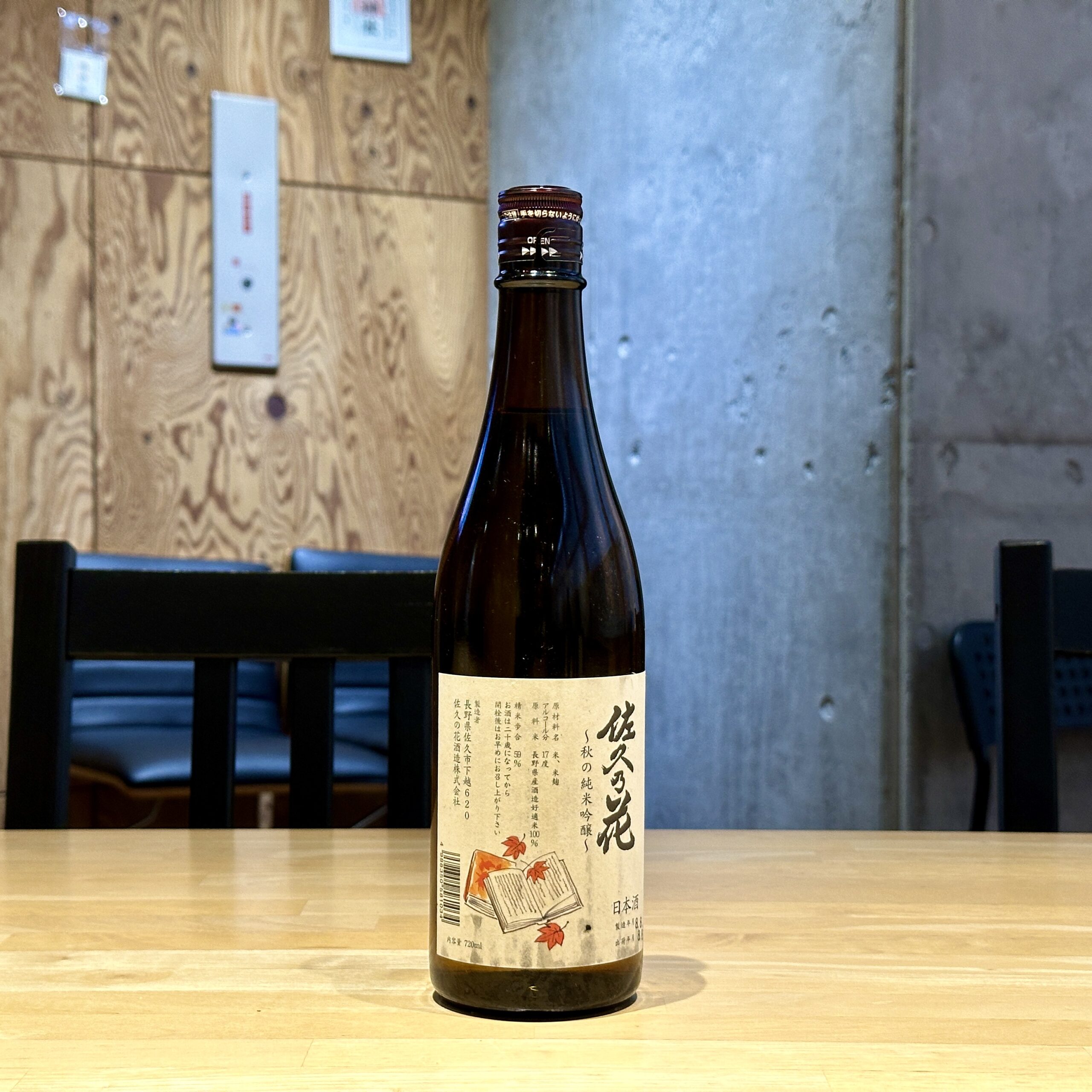
[佐久の花 秋の純米吟醸]
高尾山から秋が来る。浅川から冬が来る。八王子の人がそのように思うかは判りませんが、高尾山は西側、浅川は北側にあります。あ、失礼、おいしい酒倶楽部の今井です。
・
メタファーとは隠喩という意味なのですが、「隠喩」という漢字が書けるかというと自信が無いと言う吾人が多い、「読めるけど書けない漢字シリーズ」かも知れません。だから、メタファーと言う人が増えているのだろうと思っています。
・
判りづらいモノゴトは判らないことが多いものです。だから、判りやすいことが良いことだと思います。判りやすいでしょ?
・
秋酒とは、ひやおろしだったり、秋上がりだったりしますが、このお酒はひやおろしで、秋上がりです。ひやおろしは技術の話、秋上がりは味わいの話です。
・
春に搾られた「7号酵母」の純米吟醸原酒を瓶火入れし、土蔵でひと夏じっくりと寝かせて熟成させたお酒がこれ。出荷前にも火入れをする酒造もありますが、これは火入れは1回のみの「生詰」です。つまり、ここまでが「ひやおろし」となる技術の話。
・
角が丸くなった飲み心地として、静かな香り、柔らかでやさしい口当たりから始まり、7号酵母ならではの飲み心地が飲み応えを楽しませ、きれいな余韻を残して消えて行きます。これが「秋上がり」への変わり身。
・
春の純米吟醸と比較することですぐに判ることなのですが、如何せん、それがない。
・
ですが、食事と合わせるもよし、お酒だけ楽しむもよし、「旨いなあ、これ」と思いながら、手応えならず、飲み応えを感じて楽しむことができます。
・
つまり、判りやすい味わい。判りやすさがしっかりと伝わり、余計な言葉が要りません。この判りやすさが旨さなんだろうと思います。酒名自体も「秋の純米吟醸」と判りやすさ抜群です。
・
あなたもこの判りやすさをひとつの基準とするためにも経験してみてください。[2026.08.25]
高尾山から秋が来る。浅川から冬が来る。八王子の人がそのように思うかは判りませんが、高尾山は西側、浅川は北側にあります。あ、失礼、おいしい酒倶楽部の今井です。
・
メタファーとは隠喩という意味なのですが、「隠喩」という漢字が書けるかというと自信が無いと言う吾人が多い、「読めるけど書けない漢字シリーズ」かも知れません。だから、メタファーと言う人が増えているのだろうと思っています。
・
判りづらいモノゴトは判らないことが多いものです。だから、判りやすいことが良いことだと思います。判りやすいでしょ?
・
秋酒とは、ひやおろしだったり、秋上がりだったりしますが、このお酒はひやおろしで、秋上がりです。ひやおろしは技術の話、秋上がりは味わいの話です。
・
春に搾られた「7号酵母」の純米吟醸原酒を瓶火入れし、土蔵でひと夏じっくりと寝かせて熟成させたお酒がこれ。出荷前にも火入れをする酒造もありますが、これは火入れは1回のみの「生詰」です。つまり、ここまでが「ひやおろし」となる技術の話。
・
角が丸くなった飲み心地として、静かな香り、柔らかでやさしい口当たりから始まり、7号酵母ならではの飲み心地が飲み応えを楽しませ、きれいな余韻を残して消えて行きます。これが「秋上がり」への変わり身。
・
春の純米吟醸と比較することですぐに判ることなのですが、如何せん、それがない。
・
ですが、食事と合わせるもよし、お酒だけ楽しむもよし、「旨いなあ、これ」と思いながら、手応えならず、飲み応えを感じて楽しむことができます。
・
つまり、判りやすい味わい。判りやすさがしっかりと伝わり、余計な言葉が要りません。この判りやすさが旨さなんだろうと思います。酒名自体も「秋の純米吟醸」と判りやすさ抜群です。
・
あなたもこの判りやすさをひとつの基準とするためにも経験してみてください。[2026.08.25]
佐久の花酒造(長野県佐久市;Saku, Nagano)
[Sakunohana Autumn Junmai Ginjo]
Autumn arrives from Mount Takao; winter arrives from the Asakawa River. I’m not sure if the people of Hachioji actually feel this way, but Mount Takao lies to the west and the Asakawa River to the north. Oh, pardon me—this is Imai from the “Delicious Sake Club.”
・
“Metaphor” is a figure of speech, but it might well belong to the “Kanji I can read but can’t write” series—many people lack the confidence to actually write the characters for *in-yu* (metaphor). That is likely why more people are simply using the word “metaphor” instead.
・
Things that are hard to understand often remain misunderstood. That is why I believe clarity is a virtue. It’s easy to understand, isn’t it?
・
“Autumn sake” can refer to *Hiyaoroshi* or *Akiagari*; this particular sake is both. *Hiyaoroshi* refers to the technical process, while *Akiagari* refers to the flavor profile.
・
This sake is a *Junmai Ginjo Genshu* (undiluted pure rice ginjo) made with “Yeast No. 7,” pressed in the spring, pasteurized in the bottle, and then carefully aged in an earthen storehouse (*dozo*) throughout the summer. While some breweries pasteurize again before shipping, this is a *Namazume* (fresh-bottled) style, meaning it undergoes pasteurization only once. That covers the technical aspect of it being a *Hiyaoroshi*.
・
As for the drinking experience—the rough edges have softened. It begins with a quiet aroma and a gentle, tender mouthfeel; the unique character of Yeast No. 7 provides a satisfying depth of flavor, and it fades away leaving a clean, beautiful finish. This transformation is the essence of *Akiagari*.
・
You would understand this immediately if you compared it to the spring version of the same *Junmai Ginjo*, but—alas—I don’t have that on hand for comparison.
・
Nevertheless, whether paired with a meal or enjoyed on its own, you can savor it while thinking, “Wow, this is delicious”—experiencing a truly satisfying drink.
・
In short, it has an accessible, easy-to-understand flavor. That clarity comes through clearly, requiring no superfluous words. I believe that very clarity is what makes it so delicious. Even the name—”Autumn *Junmai Ginjo*”—is wonderfully straightforward.・
I encourage you to experience this for yourself, so that you can use this clarity as a benchmark. [2026.08.25]
Autumn arrives from Mount Takao; winter arrives from the Asakawa River. I’m not sure if the people of Hachioji actually feel this way, but Mount Takao lies to the west and the Asakawa River to the north. Oh, pardon me—this is Imai from the “Delicious Sake Club.”
・
“Metaphor” is a figure of speech, but it might well belong to the “Kanji I can read but can’t write” series—many people lack the confidence to actually write the characters for *in-yu* (metaphor). That is likely why more people are simply using the word “metaphor” instead.
・
Things that are hard to understand often remain misunderstood. That is why I believe clarity is a virtue. It’s easy to understand, isn’t it?
・
“Autumn sake” can refer to *Hiyaoroshi* or *Akiagari*; this particular sake is both. *Hiyaoroshi* refers to the technical process, while *Akiagari* refers to the flavor profile.
・
This sake is a *Junmai Ginjo Genshu* (undiluted pure rice ginjo) made with “Yeast No. 7,” pressed in the spring, pasteurized in the bottle, and then carefully aged in an earthen storehouse (*dozo*) throughout the summer. While some breweries pasteurize again before shipping, this is a *Namazume* (fresh-bottled) style, meaning it undergoes pasteurization only once. That covers the technical aspect of it being a *Hiyaoroshi*.
・
As for the drinking experience—the rough edges have softened. It begins with a quiet aroma and a gentle, tender mouthfeel; the unique character of Yeast No. 7 provides a satisfying depth of flavor, and it fades away leaving a clean, beautiful finish. This transformation is the essence of *Akiagari*.
・
You would understand this immediately if you compared it to the spring version of the same *Junmai Ginjo*, but—alas—I don’t have that on hand for comparison.
・
Nevertheless, whether paired with a meal or enjoyed on its own, you can savor it while thinking, “Wow, this is delicious”—experiencing a truly satisfying drink.
・
In short, it has an accessible, easy-to-understand flavor. That clarity comes through clearly, requiring no superfluous words. I believe that very clarity is what makes it so delicious. Even the name—”Autumn *Junmai Ginjo*”—is wonderfully straightforward.・
I encourage you to experience this for yourself, so that you can use this clarity as a benchmark. [2026.08.25]
#おいしい酒倶楽部 #佐久の花 #秋の純米吟醸 #7号酵母 #ひとごこち米 #長野酒 #Delicious_Sake_Club #sakunohana_brewery #Autumn_Junmai_Ginjo #no7_yeast #nagano_sake